The Best Chicken Coops (and How Many Hens They Really Hold)
Coop listings almost always overstate capacity. We picked six coops worth buying and checked each maker's hen count against university extension space guidelines, using inside floor sizes where the maker publishes them.
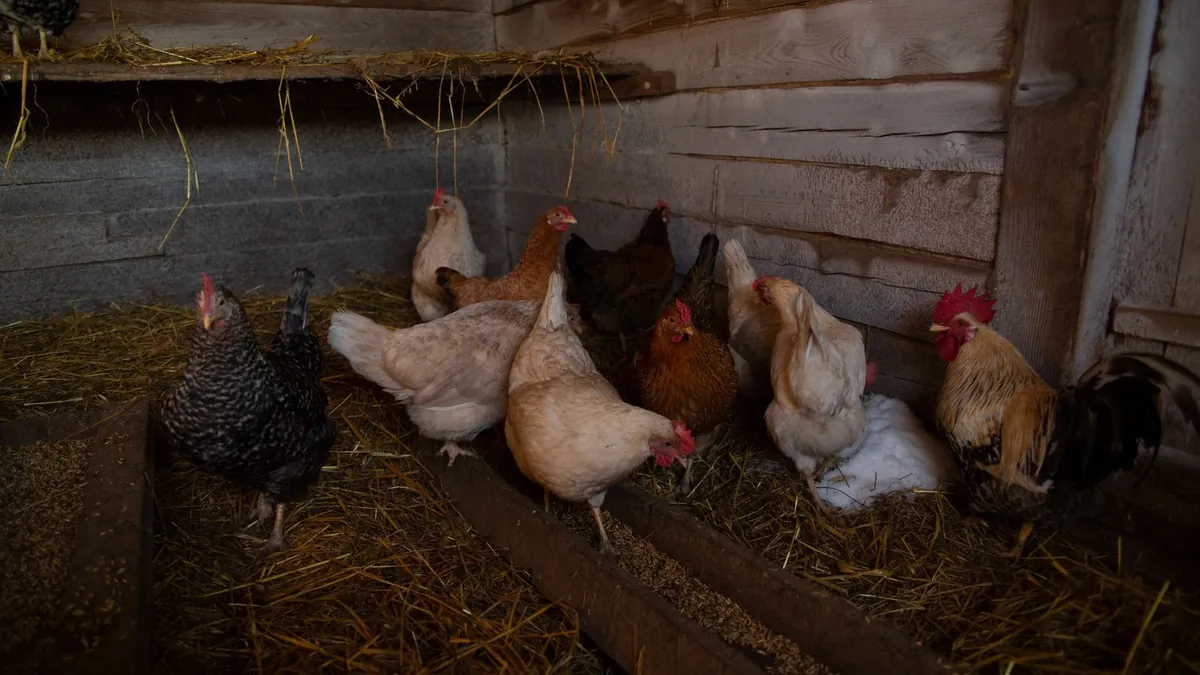
How much space hens actually need
Every coop listing gives a hen count. Almost none of them say how they got it. University extension services publish space guidelines, and they are more generous than most listings assume.
| Source | Inside the coop, per standard hen | In the run, per hen |
|---|---|---|
| Penn State Extension | 2 sq ft (1.5 for laying hens; 1 for bantams) | 10 sq ft (8 for laying hens; 4 for bantams) |
| NC State Extension | 2.5-3.5 sq ft | an additional 4-5 sq ft |
| Oregon State Extension | at least 3 sq ft with a run; 8-10 sq ft with no outdoor access | not given |
| Poultry Extension (extension.org) | 3-4 sq ft | 10 sq ft recommended |
How we size the coops below. Where the maker publishes an inside floor measurement (Formex and Omlet do), we use it. Where only outside dimensions are listed, we treat the outside footprint as an upper bound: walls, trim, overhangs, nest boxes and any built-in run all take space, so the real hen count is lower than the footprint math. Nest boxes that hang outside the walls do not count as floor, and roosts should not sit over the feeder or waterer. Measure the inside floor once the coop is built before adding birds.
Roosts and nest boxes matter too. Extension guides call for roughly 6-10 inches of roost per standard bird (Penn State says six, NC State nine or ten) and one nest box for every four or five hens, each about 12 by 12 inches. If you want to run the numbers for your own flock, use our chicken coop size calculator.
The best chicken coops

Heavy-duty wood
OverEZ Classic Medium Chicken Coop
OverEZ builds heavy wooden coops in the USA, and at a listed 320 pounds this one is built more like a garden shed than a kit. The seller's spec sheet lists three nesting boxes, two roosting bars, a screened adjustable window, two vents, a walk-in man door and a chicken door.
The capacity claim needs a second look. The maker says up to 10 chickens. At Penn State's minimum of 2 square feet per hen, ten birds need 20 square feet of floor; at the 3-4 square feet most extension services suggest, they need 30-40. OverEZ publishes only the overall size, 50.25 by 52.5 inches, which is about 18 square feet including walls and trim, so the usable floor is smaller. That footprint is an upper bound of about 4-5 standard hens at 3-4 square feet each (up to 9 at Penn State's 2-square-foot minimum, with daily run access). Measure the inside floor after assembly to firm that up.
Full review of the OverEZ Classic Medium · Compare: Eglu Cube vs OverEZ
Why it made the list
- Solid wood, made in the USA
- Heavy enough to stay put in wind
What to watch
- Maker's 10-hen count is optimistic by extension standards
- No inside floor size published; outside footprint only
- 320 lb: needs two people and a level base
Easy-clean plastic
Formex Snap Lock Large Chicken Coop
The Snap Lock is the opposite of a wooden coop: plastic panels that snap together without tools, a removable litter tray and adjustable ventilation, per Formex. Plastic does not soak up moisture the way wood does, and it gives mites fewer cracks to hide in, so cleaning is closer to a hose-down than a scrape-and-scrub.
Which model this is. The Amazon listing calls it the Large coop and describes four nesting spots and three 36-inch roosts, with assembled dimensions of 64 x 39 x 42 inches. Those match Formex's Big Coop. The "17 x 43 x 26 inches; 65 pounds" in the listing's details is the shipping box (Formex's own store lists the Big Coop's box as 17 x 26 x 42 inches, 65 pounds), not the coop.
How many hens. The 64-inch length runs from nest box to nest box; the birds' floor is the coop base, which Formex's assembly manual gives as 40 by 37 inches, about 10.3 square feet. That fits about 3 standard hens at the 3-4 square feet most extension services suggest, or up to 5 at Penn State's 2-square-foot minimum with daily run access. The two stated capacities disagree (4-6 on the listing, 12-15 on Formex's site), and both are higher than the floor supports by extension standards.
Why it made the list
- Plastic is easy to wash and does not rot
- Tool-light snap-together assembly
- Hinged nest box lid for egg collection
What to watch
- Floor is about 10 sq ft: far fewer hens than either stated capacity
- Plastic coops can run warm in full summer sun; give it shade
Twin-wall plastic
Omlet Eglu Cube Large Chicken Coop
Omlet builds the Eglu Cube from twin-wall plastic, which Omlet says insulates against heat and cold. The listing calls out a nesting box filled with wood shavings and an easy-to-clean design.
The Amazon listing does not state a hen count. Omlet's own comparison page says the Eglu Cube houses 6 large or 10 small hens and gives the inside of the house as 2 ft 10 in by 2 ft 9 in, which is just under 8 square feet. By extension guidelines that floor alone suits 2 standard hens at 3-4 square feet each, or 3 at Penn State's 2-square-foot minimum; Omlet's higher count assumes the birds spend the day in the attached run. Give them a run of at least 8-10 square feet per bird.
Full review of the Eglu Cube · Compare: Eglu Cube vs OverEZ
Why it made the list
- Twin-wall plastic helps with summer heat and winter cold
- Fast to clean
What to watch
- Inside floor is small for Omlet's stated hen count
- Plastic look is not for every backyard
Rot-resistant composite
New Age Pet ECOFLEX Fontana Premier Chicken Barn
New Age Pet builds the Fontana Premier from ECOFLEX, a composite of recycled polymers and reclaimed wood fiber. It looks like a wooden coop, and the maker says it resists moisture, odor and scratching. Cleaning is the selling point: a tray slides out from under the floor, and the roof is hinged so you can reach the whole inside. A nest box hangs off one side. The panels go together without tools, and New Age Pet backs the coop with a 10-year warranty.
The listing says it "comfortably houses 2-4 chickens" but gives no inside floor size. The dimension diagram on the listing shows 54.7 by 28.7 inches overall, and that includes the side nest box, which does not count as floor. The house under the roof is at most 40.6 by 28.9 inches, about 8 square feet, so that is the upper bound. The pull-out tray, at 36.3 by 24 inches (about 6 square feet), is the closest guide to the real floor. That fits about 2 standard hens at 3-4 square feet each, or 3 at Penn State's 2-square-foot minimum with daily run access. The maker's 4 is a ceiling, not a target. No run is included, so plan on 8-10 square feet of run per hen. Measure the inside floor once it is built.
Specs are from the Amazon listing and its dimension diagram. We swapped in the Fontana Premier in Oct 2026 when the Fontana Jumbo went out of stock.
Why it made the list
- Composite that looks like wood and resists moisture, per the maker
- Pull-out tray and hinged roof make cleaning easy
- Tool-free assembly, 10-year warranty
What to watch
- No inside floor size published; the tray suggests about 6 sq ft
- Maker's 4-hen count is high for that floor
- No run included
Budget pick, 2-3 hens
Aivituvin Expandable Mobile Chicken Coop
Aivituvin's listing gives this coop a capacity of 2-3 adult chickens, which is the right kind of number: a ceiling, not a sales pitch. It is a wooden coop over a wire run on two wheels with a long handle, so one person can roll it to fresh grass, and the tray under the house pulls out for cleaning. A nesting box and a rounded roost are built in, and the listing says two units join end to end if the flock grows.
The listed 80.7 by 22 inches (about 12 square feet) covers the house and run together, so the enclosed coop is a small part of it; plan on two hens, three at most. As with every budget wooden kit, seal the wood when it arrives, and if raccoons or foxes are around, add better latches and hardware cloth over the run wire before the first night.
Swapped in October 2026 when the Aivituvin AIR31 went out of stock; same brand, same price class.
Why it made the list
- Low price for a complete coop and run
- Wheels and a handle: moves to fresh ground
- Maker's 2-3 hen count is realistic
What to watch
- Budget kit: plan on sealing the wood and upgrading latches
- Small; two coops joined is the only way to grow it
Small coop on wheels
Ketive Large Wooden Chicken Coop with Run and Wheels
This all-in-one coop has a small run underneath and wheels, so you can roll it to fresh grass every few days. The listing says 1-3 hens. The whole unit is about 71 by 26 inches outside, roughly 13 square feet split between house and run, so the built-in run is too small for three hens by extension standards; give them extra outdoor time or a larger run.
Treat it as a starter or a separate pen (for new birds in quarantine, or a broody hen), not as permanent housing for a growing flock.
Why it made the list
- Wheels make it easy to move to fresh ground
- Attached run and pull-out tray
- Realistic 1-3 hen rating
What to watch
- Built-in run is small by extension standards
- Budget build: reinforce latches and wire for predators
Comparison table
| Coop | Stated hen count | Floor area we used | Standard hens it fits (3-4 sq ft / 2 sq ft each) | Material |
|---|---|---|---|---|
| OverEZ Classic Medium | up to 10 | under 18.3 sq ft (outside footprint, upper bound) | at most 4-5 / 9 | Wood |
| Formex Snap Lock Large | 4-6 (listing); 12-15 (Formex) | about 10.3 sq ft (coop base, Formex manual) | about 3 / 5 | Plastic |
| Omlet Eglu Cube Large | 6 large or 10 small (Omlet) | about 7.8 sq ft (inside floor, Omlet) | about 2 / 3 | Twin-wall plastic |
| New Age Pet Fontana Premier | 2-4 | about 6 sq ft (pull-out tray; under 8.1 sq ft under the roof, upper bound) | about 2 / 3 | Composite |
| Aivituvin AIR31 | 2-4 (suggested) | coop section not listed; whole unit 13.5 sq ft | use the maker's 2-4 as a ceiling | Wood |
| Ketive coop with wheels | 1-3 | coop section not listed; whole unit 12.8 sq ft | use the maker's 1-3 as a ceiling | Wood |
Hen counts are our calculation from extension space guidelines (3-4 sq ft recommended, 2 sq ft Penn State minimum, both with run access) and the floor area shown. Where only outside dimensions are published, the result is a ceiling: the usable inside floor is smaller. To check a coop you already own, measure the inside floor and use our coop size calculator.
How to choose a chicken coop
Start with the flock you will have, not the one you have
Most people add birds. Buy for the flock you expect in two years, and use extension space numbers rather than the box.
Ventilation without drafts
Extension services agree that ventilation matters even in winter: Illinois Extension recommends a roof or eave vent plus a partly open window, and warns you should never feel air moving the birds' feathers on the roost. Look for vents high on the walls, away from the roosts.
Predator protection
Chicken wire keeps chickens in; it does not keep raccoons out. MassWildlife says it plainly: chicken wire is "designed to keep birds in, but won't always keep predators out." Plan on locking latches and welded wire or hardware cloth over openings. Our predator-proofing guide covers the details.
Cleaning
Pull-out trays, removable roofs and plastic construction all cut cleaning time. You will clean far more often than you assemble, so weigh this heavily.
Whatever you buy, the floor gets 3 to 4 inches of pine shavings or hemp before the hens move in; see the best chicken coop bedding, including the deep litter method that cuts full clean-outs to a few a year.
Wood, plastic or composite
Wood looks right and is easy to modify but needs sealing and harbors mites in its cracks. Plastic cleans fastest and will not rot, but it can run hot in full sun. Composites sit in between.
For runs, nesting boxes, automatic doors, bedding and lighting, see all of our coop and run guides.
Frequently Asked Questions
How many chickens can a coop hold?
Divide the inside floor area by 3-4 square feet for standard hens (Penn State lists 2, or 1.5 for laying hens). A coop with 16 square feet of usable floor suits about four or five standard hens. Bantams need about half as much.
Do I need a run as well as a coop?
Yes, for most backyards. Extension guidelines call for roughly 8-10 square feet of outdoor space per standard hen, and a covered run also protects against hawks. See our best chicken runs.
Are cheap wooden coops worth it?
For two or three hens, yes, as long as you seal the wood and upgrade the latches and wire. For larger flocks, a cheap kit is usually outgrown or worn out within a few seasons.
Is a plastic coop better than wood?
Plastic is easier to clean and does not rot or hide mites, but it costs more and can get hot in direct sun. Wood is cheaper and easier to modify.
Sources
- Penn State Extension: Small Scale Poultry Housing
- NC State Extension: Keeping Garden Chickens in North Carolina
- Oregon State University Extension: EC 1644, Coop Design
- Poultry Extension (extension.org): Space Allowances for Small and Backyard Flocks
- University of Maine Extension: Bulletin 2220, Raising Chickens
- University of Illinois Extension: Winter Care for Backyard Chickens
- MassWildlife: Protect Your Poultry from Predators
- Formex (Snap Lock): Big Chicken Coop specifications
- Formex: Snap Lock Large Coop (LG12) instruction manual, PDF
- Omlet: Eglu chicken coop comparison (internal dimensions and hens housed)
- Hatching Time: OverEZ Medium Chicken Coop specifications
- New Age Pet: Fontana Premier Chicken Barn product page
Ready to buy?
Browse current pricing, current models, and reader reviews on Amazon. Your clicks keep these guides free.
Shop Chicken Coops on Amazon →